
Yu-Gi-Oh! Cards in Thailand
828 sets · 46,699+ cards in the catalog
A Yu-Gi-Oh! marketplace for Thai players and collectors, covering sets from classic to current with market prices updated daily — compare before you buy or list.
Every order is protected, sellers are identity-verified, payment works by card or PromptPay, and delivery is nationwide via Flash Express.
To check a Yu-Gi-Oh card price on Cardstreet, search the card name or the set code printed on the card, then open the card page for its market price in Thai baht with price history. The catalog covers both the English TCG and the Japanese OCG — more than 45,000 cards across 800-plus sets — so older hard-to-find cards and Japan-only prints are searchable in the same place.
Where to buy Yu-Gi-Oh! cards in Thailand
The Yu-Gi-Oh! market in Thailand is spread across card shops, buy-and-sell groups and general marketplaces. What makes it harder to buy than other games is that the same card name is reprinted many times across many sets, each printing at a different rarity and a different price. Someone searching by card name alone can easily pay one version’s price for another.
On Cardstreet every printing is its own page, labelled with its set code, collector number and rarity, and priced for that printing specifically. That way you can see exactly which version you are paying for. Sellers are identity-verified and orders ship nationwide via Flash Express.
How to spot a fake Yu-Gi-Oh! card
Yu-Gi-Oh! has one of the largest counterfeit circulations of any card game, because it has been printed for decades and has many high-value cards. The easiest tell is the back of the card: a genuine one has an even brown-purple tone with a crisp central circle, while fakes usually shift red or grey and have blurred edges.
The second is text sharpness. Look at the effect text under a magnifier or a phone camera zoom — genuine printing gives clean single-stroke letters, while fakes show scattered print dots. The third is thickness and weight: held against a genuine card you already own, a fake usually feels thin or unusually slick.
Buying from someone you do not know, always ask for photos of the back and the edges in natural light rather than stock images from the internet.
Which Yu-Gi-Oh! editions are in the catalog
The Yu-Gi-Oh! catalog on Cardstreet covers two editions: English, which is the TCG side played competitively in Thailand and internationally, and Japanese, which is the OCG. There is no official Thai edition. The Thai-translated cards commonly sold around are unlicensed and not tournament legal, so they are not in this catalog.
The two editions do not share a single rulebook. Their forbidden and limited lists differ, so the same card can be worth very different amounts on each side. The guide comparing TCG and OCG is below.
Latest sets
Browse all sets → Beyond the Brave100 cards
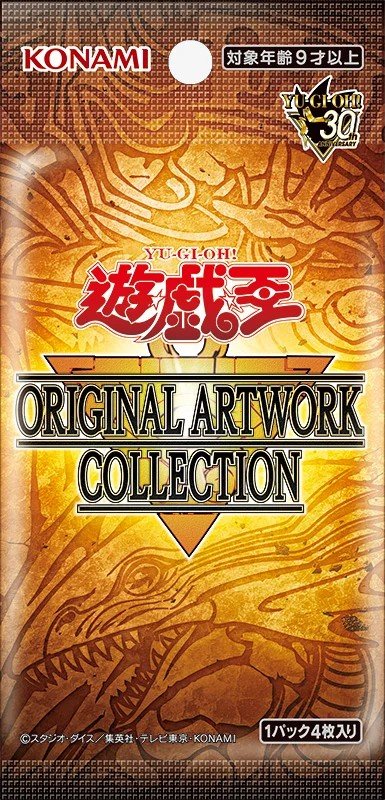 Original Artwork Collection286 cards · JA
 Magnificent Monsters126 cards
 Limited Pack World Championship 202621 cardsLimited Pack World Championship 202647 cards · JA
 Legendary Arc-V Decks115 cards
 THANK YOU PACK26 cardsBeyond the Brave130 cards · JA
 Winner's Pack 2026-202740 cards
 Chaos Origins134 cards · JAChaos Origins100 cards
 Ultimate Tournament Pack 149 cards
Guides
All guides →Frequently asked questions
Where can I buy authentic Yu-Gi-Oh! cards in Thailand?
Cardstreet lists Yu-Gi-Oh! cards from identity-verified sellers across Thailand, with buyer protection on every order and Flash Express delivery.
How do I check Yu-Gi-Oh! card prices?
Every card page on Cardstreet shows a free live market price, or scan a physical card with the app for an instant check.
Can I sell Yu-Gi-Oh! cards on Cardstreet?
Yes — sign up free and list immediately, with suggested prices from real market data and built-in shipping.
What is the difference between Yu-Gi-Oh OCG and TCG?
OCG is the Japanese edition sold across Asia; TCG is the English edition sold in Western markets. They maintain different competitive card pools, release sets on different schedules, and some cards exist on only one side — so the same card can be worth very different amounts in each. Cardstreet prices both separately so you can compare them.
Are old Yu-Gi-Oh cards from years ago worth anything?
Some are worth a great deal — particularly early-era cards with small print runs, Secret and Ultimate Rares, and tournament promos — while commons from heavily reprinted sets usually are not. The fastest way to find out is to search each card on Cardstreet for its current market price, or scan them one by one in the app to value a whole stack.
How do I check prices for graded Yu-Gi-Oh cards?
Cardstreet card pages show graded prices broken out by grading company and grade — PSA, BGS, CGC, and TAG — next to the raw price, so you can see immediately how much grading changes what a card is worth. That is the number worth looking at before you decide to send anything in.
What is the difference between 1st Edition and Unlimited?
A 1st Edition card comes from a set’s first print run and carries the words "1st Edition" under the artwork; the Unlimited printings that follow do not. Both are tournament legal, but 1st Edition usually carries a premium in the collector market because fewer were made, and the gap widens on older or rarer cards.
Do banned Yu-Gi-Oh! cards still hold value?
Yes, but for different reasons. A banned card loses its competitive buyers, so the price usually softens after an announcement, leaving collector and casual demand behind. Some famous older cards stay expensive despite being banned. The TCG and OCG banlists also differ, so a card banned on one side may still be legal on the other.
What do I need to buy to start playing Yu-Gi-Oh!?
The cheapest route is a ready-to-play structure deck, then buying only the individual cards you actually need. Opening random packs to chase a specific card usually costs several times more than simply buying that card. You can check single-card prices on Cardstreet for free before deciding.
How should I store older Yu-Gi-Oh! cards to keep their value?
The enemies of older cards are humidity and light, and Thailand has plenty of both. Sleeve them, keep them in a closed box, and store that away from direct sun and away from bathroom walls. A card with sharp edges and an unclouded surface can be worth several times one that was stored badly — and if you intend to submit it for grading, that care has to start on day one.