
Pokémon TCG Cards in Thailand
351 sets · 43,796+ cards in the catalog
Cardstreet is Thailand’s online marketplace for Pokémon TCG collectors, bringing Thai, English, and Japanese Pokémon cards together in one catalog with market prices updated daily — from the newest sets to chase Secret Rares.
Every purchase is protected by secure checkout, sellers are identity-verified, and orders ship nationwide via Flash Express. You can also scan any card with AI to check its price and track your collection for free in the Cardstreet app.
There are three ways to check a Pokémon card price on Cardstreet. Search the card name or its collector number and open the card page, where you will see the market price in Thai baht with 7, 30, and 90-day history. If you do not know which card you are holding, scan it with the camera in the app and it will match the right print for you. Or open a set page and browse every card in that set with its price. All of it is free and needs no account.
Where to buy Pokémon cards in Thailand
There are only a few ways to buy Pokémon cards in Thailand and they suit different people. Facebook buy-and-sell groups are the cheapest because there are no fees, and the trade-off is that you negotiate, transfer and trust a stranger entirely on your own. Physical card shops let you inspect a card before paying, but stock is limited to whatever that shop happened to buy. General marketplaces have refund systems, but sellers are not screened for card knowledge, so cards that do not match their photos are common.
Cardstreet sits between those. Every seller is identity-verified before listing, orders are paid through secure checkout with buyer protection, and everything ships nationwide via Flash Express with tracking. The difference from all of the above is that every card carries a market price, so you can see how far above or below the going rate you are about to pay instead of guessing.
If you are not sure what a card should cost, check its price for free first, then decide where to buy it.
How to start collecting without wasting money
The first decision is which language to collect. Thai cards are the cheapest entry and the easiest to find domestically, Japanese cards often carry the artwork collectors chase, and English is the language played at international events. Picking one lane and completing sets in it goes further than buying scattered cards across all three. The guides below cover exactly how the three differ.
The second is condition. The same card in different condition can differ in price several times over. Look at real photos of every card before buying, edges and all four corners especially, and if a seller only posts stock images, ask for real ones before you transfer anything.
The third is not to rush an expensive card in your first month. Newly released cards usually price high and settle once more product reaches the market. Checking a card’s price history first shows you whether it is climbing or cooling.
Scan a Pokémon card to check its price
If you have a stack of cards in front of you and no idea which ones are worth anything, open the camera in the Cardstreet app and point it at them. It reads the set code and collector number, matches the exact card in the catalog, and shows the market price in Thai baht straight away.
The scanner handles Thai, Japanese and English cards, and it identifies which card of which set you are holding rather than just naming the Pokémon — the same Pokémon in a different set or rarity can be worth many times more or less. Once scanned, save it to your collection to track what the whole stack is worth. It is free to use.
Latest sets
Browse all sets → 30th CELEBRATION165 cards · JA
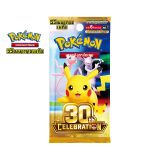 30th CELEBRATION200 cards · TH
 30th Celebration161 cards
 30th Celebration Classic Collection30 cardsMF30th CELEBRATION プレミアムデッキセット エーフィ・ブラッキー44 cards · JAM6ストームエメラルダ113 cards · JAMEEスターターセットex イーブイex20 cards · JAMEMスターターセットex ニャオハ&マスカーニャex18 cards · JAMEZスターターセットex ゾロア&ゾロアークex20 cards · JAMATHแท็กติกเด็ค เมก้าซาเมฮาเดอร์ex21 cards · THMATKแท็กติกเด็ค เมก้าไคริวex25 cards · THMATLแท็กติกเด็ค เมก้าลิซาร์ดอน Xex24 cards · TH
Guides
All guides →Frequently asked questions
Where can I buy authentic Pokémon cards in Thailand?
On Cardstreet — an online marketplace of identity-verified Pokémon card sellers across Thailand. Every order has buyer protection, card and PromptPay payment, and Flash Express delivery.
How do I check Pokémon card prices?
Every card page on Cardstreet shows a live market price for free, or scan a physical card with the Cardstreet app for an instant price — Thai, English, and Japanese cards are all supported.
Can I sell my Pokémon cards on Cardstreet?
Yes — signing up is free and you can list immediately. Cardstreet suggests prices from live market data, pays out securely via Stripe, and has Flash Express shipping built in.
Do Thai and English Pokémon cards have different prices?
Yes. The same card in a different language is a different card to the market, traded by different collectors, so Cardstreet prices each language separately. Thai-language cards are priced from the domestic Thai market; English and Japanese cards reference global markets converted to Thai baht. When comparing, match both the language and the collector number.
Which Pokémon cards are worth the most?
Generally the ones printed in small numbers and kept in good condition. Rarities such as Secret Rare, Special Art, and event promo cards usually sell for several times a common card from the same set, and condition matters just as much — sharp corners and a clean surface fetch noticeably more than a played copy. Set pages on Cardstreet show the real prices for each rarity side by side.
Can I buy sealed Pokémon boxes and packs?
Yes. Cardstreet carries sealed booster boxes, booster packs, and special set boxes in Thai, English, and Japanese, with market prices alongside singles. Sealed product appeals both to people who want to open it and to collectors holding it, since boxes from sets that have gone out of print tend to move up over time.
Are Thai or Japanese Pokémon cards cheaper?
Thai prints are usually cheaper than the Japanese card they were printed from, because Thai sets follow the Japanese set using the same collector numbers — but not always, and unusually scarce cards can run the other way. The reliable check is to open both language versions on Cardstreet and compare the prices directly.
Is buying Pokémon cards on Cardstreet safe?
Every seller is identity-verified before they can list. Payment goes through secure checkout with buyer protection, orders ship via Flash Express with tracking, and if what arrives does not match the listing you can contact our team to look into it.
How do I spot a fake Pokémon card?
The easiest tells are how crisp the text prints, the colour of the card edge under light, and the weight against a genuine card you already own. Buying from someone you do not know, always ask for photos of the back and the edges in natural light rather than stock images. There is a detailed guide to spotting fakes in the guides section.
How do I sell the Pokémon cards I already own?
Register as a seller and verify your identity, then scan or search for the card, set your price using the displayed market price as a reference, and wait for a buyer. Fees and payout timing are covered on the selling page.