
One Piece Card Game in Thailand
114 sets · 6,395+ cards in the catalog
A marketplace for One Piece Card Game collectors in Thailand, covering English and Japanese versions — from popular Leaders and Secret Rares like Luffy, Shanks, and Nami to sealed booster boxes, all with daily-updated market prices.
Buy from identity-verified sellers across Thailand with buyer protection on every order and Flash Express delivery — or sign up free and list your own cards.
To check a One Piece card price on Cardstreet, search the character name or the card code (the ones beginning with OP) and open the card page for its market price in Thai baht and price history. The catalog holds more than 5,500 cards across the English and Japanese editions. If you have a card in hand but are not sure which version it is, scan it with the camera in the app and it will identify the print for you.
Where to buy One Piece cards in Thailand
One Piece cards in Thailand move through three main channels: shops that import their own stock, social buy-and-sell groups, and online marketplaces. The most common problem is not counterfeits — it is overpaying because there is no reference price to check against, especially in the first few weeks of a new set when prices swing hard.
On Cardstreet every card carries a market price next to the listing, so you can see immediately whether the one you are about to buy sits above or below the going rate. Sellers are identity-verified, payment goes through secure checkout with buyer protection, and orders ship nationwide via Flash Express with tracking.
English or Japanese One Piece cards?
One Piece cards come in a Japanese edition that releases first and an English edition that follows. Both use the same set codes such as OP and ST, which leads people to assume they are the same card and should cost the same. They are separate markets with different print runs, volumes and demand, so the same character card can be priced very differently between them.
The thing to get right before buying is that you are comparing like with like, rather than checking a Japanese price and paying it for an English card. On Cardstreet each edition is its own page with its own price. The guide below compares the two in detail.
What moves One Piece card prices
The clearest driver is competitive play. Cards that appear in consistently winning decks get bought up and rise fast, then fall just as fast when something replaces them. The other driver is character popularity: cards of major characters are bought by people who simply like them rather than to play with, so they tend to hold steadier and track the metagame less.
The factor people overlook is reprints. When a card is reprinted in a collection or supplementary set, supply increases immediately and the earlier printing usually softens. Before committing to an expensive card it is worth reading its price history rather than only today’s number.
Latest sets
Browse all sets →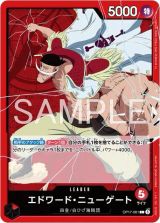 World's Strongest Warriors130 cards · JAop-st-31Starter Deck 31: RED Monkey.D.Luffy9 cardsop-st-32Starter Deck 32: GREEN Roronoa Zoro9 cardsop-st-33Starter Deck 33: BLUE Kuzan9 cardsop-st-34Starter Deck 34: PURPLE Charlotte Katakuri10 cardsop-st-35Starter Deck 35: RED/BLACK Sabo9 cardsop-st-36Starter Deck 36: YELLOW Eustass"Captain"Kid11 cards
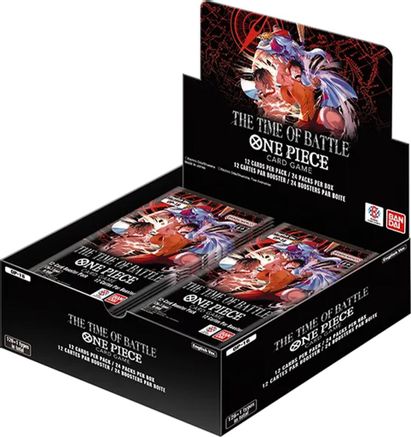 The Time of Battle125 cardsop-st-30Starter Deck EX: Luffy & Ace17 cards
 The Time of Battle125 cards · JA
Guides
All guides →Frequently asked questions
Where can I buy One Piece cards in Thailand?
Cardstreet lists One Piece singles and sealed product from identity-verified sellers across Thailand, with card or PromptPay payment and buyer protection.
What is the difference between Japanese and English One Piece cards?
Gameplay is identical, but releases and market prices differ. Cardstreet catalogs both versions with separate prices per language so you can collect either.
How do I check One Piece card prices?
Open any card page on Cardstreet for a free live market price, or scan the card with the app for an instant price check.
Are parallel and alternate art One Piece cards worth more?
Substantially. An alternate art or parallel version of the same card usually sells for several times the regular version, because it is printed at a much lower rate. That means matching the exact version when you check a price, not just the card name — Cardstreet lists each version separately so the two do not get mixed up.
Can I buy sealed One Piece boxes?
Yes — booster boxes, booster packs, and starter decks in both the English and Japanese editions, with market prices. One Piece sealed product often sells out on its first print run, so boxes from sets that are no longer being made typically trade above their original retail price.
Can I sell One Piece cards on Cardstreet?
Yes. Signing up is free, listing is free, and you pay a fee only when a card actually sells. Cardstreet suggests a price from current market data, handles payment securely, and lets you print a Flash Express shipping label straight from the app.
What is the difference between a Leader and a Character card?
Every deck runs exactly one Leader, which stays in play for the whole game and determines which colours the deck may use. Character cards are what you play onto the field during the game. Because the Leader sets the direction of the whole deck, players usually pick one first and build around it, which is why popular Leaders move in price with the decks they enable.
Can I play Japanese One Piece cards at Thai events?
It depends on the event. Many organisers require a single edition throughout a deck, while some allow mixing if you carry a translation. Read the organiser rules first. If you are collecting rather than competing, it makes no difference.
Are older One Piece sets still available, and are they going up?
The game’s earliest sets were printed well below demand, so stock is thin and prices sit above newer sets that were printed to meet the market. The same card reprinted in a later collection is usually noticeably cheaper than its original printing, so check which version you are buying.
Are fake One Piece cards common?
They exist, particularly on high-value cards such as alternate arts and competitive staples. The easiest checks are text sharpness and the colour of the card edge under light. Buying from someone you do not know, ask for real photos from several angles before transferring. There is a detailed guide to spotting fakes in the guides section.